California Proposition 51: How Fault Is Split Between Defendants
California Proposition 51 splits non-economic damages, such as pain and suffering, by fault. When several defendants share the blame, each answers only for its own percentage of those damages. Economic damages, such as medical bills and lost earnings, stay joint. So any responsible defendant can be liable for all of them.
This guide explains where the rule comes from and how the two kinds of damages differ. It also covers what happens when a defendant cannot pay or is not in the lawsuit.
What is California Proposition 51?
California Proposition 51 is the Fair Responsibility Act of 1986, a voter initiative approved in June 1986. Today it sits in Civil Code sections 1431 to 1431.5. It changed the old rule, which let an injured person collect all damages from any one defendant. That was true however small the defendant’s share of fault.
The findings in section 1431.1 describe that old approach as a “deep pocket” rule. Under it, a defendant with money or insurance but little fault could end up covering the whole loss. So the stated goal was to tie each defendant’s liability more closely to its own degree of fault.
The core rule sits in Civil Code section 1431.2. In an injury, property damage or wrongful death case based on comparative fault, liability for non-economic damages is several only, not joint. In plain terms, each defendant owes its own slice. The court enters a separate judgment against each one for that amount.
What is the difference between economic and non-economic damages under Proposition 51?

Economic damages are money losses you can verify, such as medical expenses, lost earnings, repair costs and burial costs. Non-economic damages are losses without a price tag, such as pain, suffering, emotional distress and loss of companionship. Section 1431.2(b) defines both, and Proposition 51 limits only the second kind.
That line matters because the two kinds follow different rules. For economic damages, each responsible defendant can still be liable for the full amount, after any reduction for your own share. For non-economic damages, each defendant answers only for its percentage. In a 1992 decision, the California Supreme Court confirmed that Proposition 51 kept joint liability for economic losses.
How does Proposition 51 work in a crash with several defendants?

It works in two steps. First, the jury sets each person’s percentage of fault and finds your total damages. Then each defendant owes non-economic damages only in line with its own percentage. Meanwhile, any responsible defendant can still be liable for the full economic damages, which keeps that part of the claim joint.
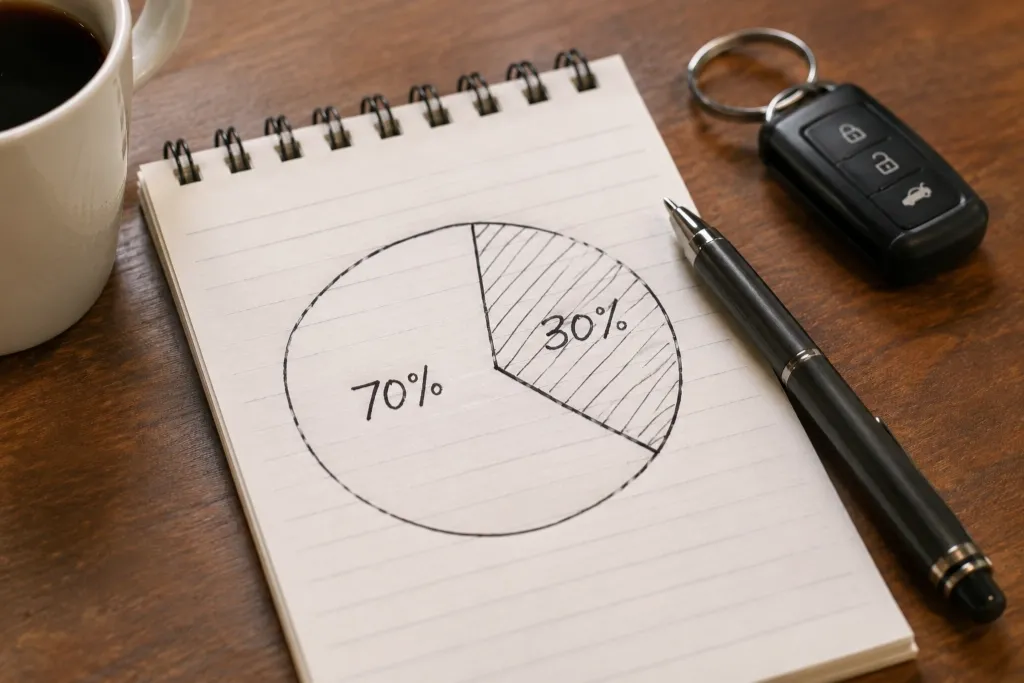
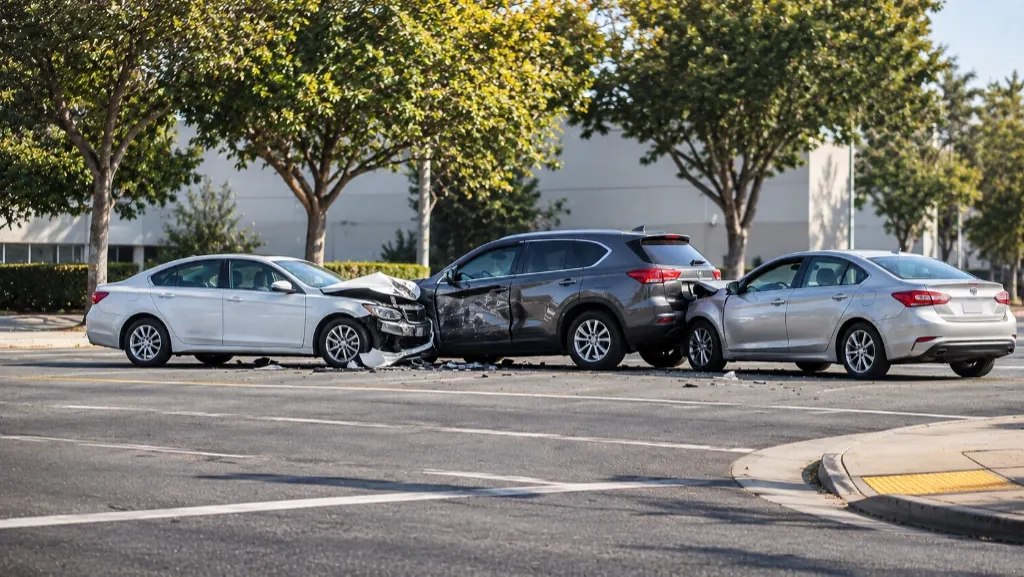
Here is an illustration, not a real case. Say your car sits at a red light when two other cars collide in the intersection and one spins into yours. A jury finds the first driver 70 percent at fault for running the light. It finds the second driver 30 percent at fault for speeding. You were not at fault.
For non-economic damages, the first driver is responsible for 70 percent and the second driver for 30 percent. For economic damages, either driver can be liable for the full amount.
What happens when one defendant cannot pay?
It depends on the type of damages. For economic damages, you may still collect the full amount from a defendant who can pay. For non-economic damages, the missing share of a defendant with no insurance or assets does not shift to the other defendants. The California Supreme Court has said the injured person now carries that risk.
In the illustration, say the first driver has no insurance and no assets. The second driver can still be liable for all of your economic damages, but for only 30 percent of the non-economic damages. That is one reason your own uninsured motorist coverage may matter after a multi-car crash.
Can fault be assigned to someone who is not in the lawsuit?
Yes. A jury compares the fault of everyone responsible for the harm, not only the defendants at trial. In the same 1992 decision, the California Supreme Court held that this includes an injured worker’s employer. That holds even though workers’ compensation rules generally keep the worker from suing it. Each defendant’s share is a percentage of all the fault involved.
CACI 406, the standard jury instruction on apportionment, lets the defense point to people who are not at trial, such as someone who settled earlier. Any share the jury gives an absent person is a share the defendants at trial do not owe for non-economic damages.
So it helps to know early who else may share the blame, from another driver to a property owner. A personal injury lawyer in Los Angeles can look at every possible defendant before the deadlines pass.
How does Proposition 51 interact with your own share of fault?
Your own share comes first. Under California’s pure comparative fault rule, your total damages go down by your own percentage. Then Proposition 51 divides the non-economic damages among the defendants by their percentages, and you carry your own part. Economic damages, after that reduction, remain joint.
Now change the illustration. Say you were 10 percent at fault, the first driver 60 percent and the second driver 30 percent. Your economic damages would drop by 10 percent, and either driver could be liable for the rest. For non-economic damages, the first driver would answer for 60 percent and the second for 30 percent, leaving 10 percent with you.
Viciti Law’s post on contributory fault explains how a jury sets your own share.
Frequently asked questions
Does Proposition 51 apply to medical bills?
No, not in the way it applies to pain and suffering. Section 1431.2 lists medical expenses as economic damages, and Proposition 51 limits only non-economic damages. So any defendant found responsible can still be liable for your full medical expenses, reduced by your own share of fault, if any.
Is Proposition 51 the same as Proposition 213?
No. Proposition 51, from 1986, divides non-economic damages among defendants by fault. Proposition 213, from 1996, is Civil Code section 3333.4. In a vehicle case, it bars non-economic damages for three groups, with one exception: a driver convicted of DUI for the crash, an uninsured owner and a driver who cannot show financial responsibility.
Does Proposition 51 apply to an employer’s liability for its driver?
Not to split an employer from its own employee. Sometimes an employer is liable only because its employee was driving on the job. In that case, California’s Supreme Court has held that the employer’s liability matches the employee’s share of fault. The two count as one share, and Proposition 51 divides fault among the independent wrongdoers.
How long do I have to file?
For most injury claims, the deadline is two years from the injury under Code of Civil Procedure section 335.1. Property damage claims generally have three years under section 338. If a public entity is one of the defendants, a written claim is due within six months under Government Code section 911.2. Proposition 51 does not change these deadlines.
Talk to Viciti Law About Proposition 51
If more than one person or business may share the blame for your injury, the split can affect what each one owes. To sort out who is responsible, contact Viciti Law for a free consultation or call (310) 919-5011.
The office is at 13743 Ventura Blvd, Suite 240, in Sherman Oaks. The firm speaks Spanish and Russian, and it takes each and every case personally.
Book Free Consultation (button, links to /contact-us/)
Past results do not guarantee a similar outcome. This article provides general information about California law and is not legal advice. Reading it does not create an attorney-client relationship. Attorney Advertising.