
No. California is an at-fault state for car accidents, meaning the driver who caused a crash is generally responsible for the resulting injuries and damage. At Viciti Law, we help people injured in California crashes understand how fault, insurance coverage and shared responsibility may affect their claims.
How does California’s at-fault system work?
Under Civil Code section 1714, everyone is responsible for injuries caused by their lack of ordinary care. After a crash, an injured person can generally pursue a claim against the driver who caused it, with that driver’s liability insurance potentially covering the damages.
Some states use a no-fault system instead. There, each driver’s own policy generally covers injury costs first, regardless of who caused the crash, and lawsuits against the other driver are limited. In California, fault helps determine who is responsible for paying those costs.
How is fault decided after a California crash?
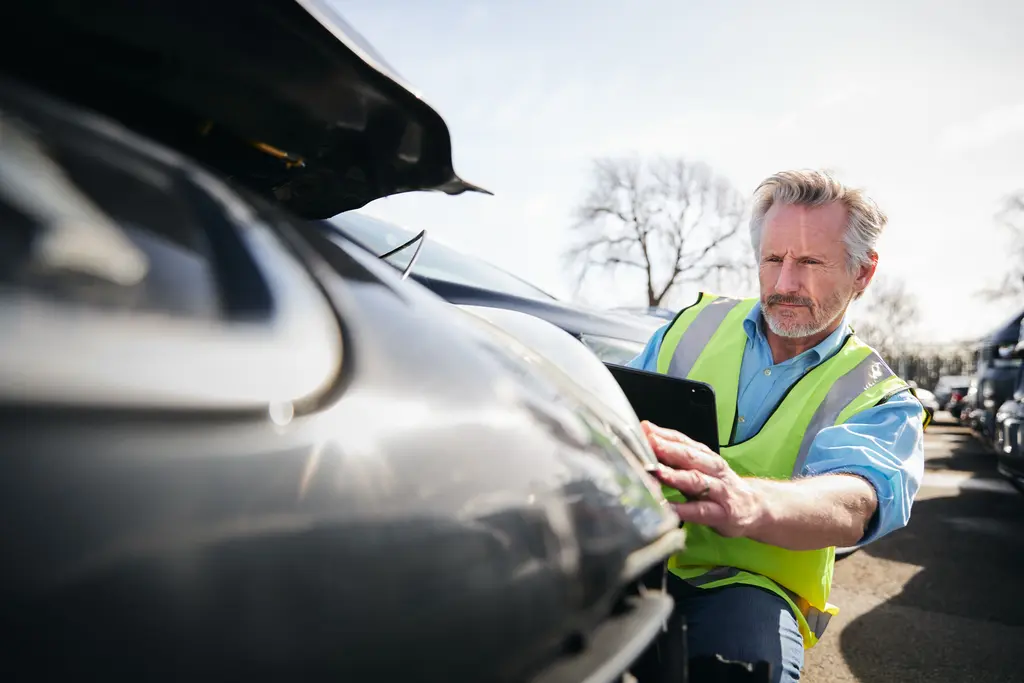
Determining fault means identifying who failed to use reasonable care. If a case goes to court, a judge or jury makes the final call. Until then, an adjuster’s fault split is the insurer’s position, not a legal ruling.
Evidence that often matters includes:
- A broken traffic law, such as an unsafe lane change
- The police or CHP report
- Photos of the cars, the road and any signals
- Dashcam, doorbell or business video, which may not be kept long
- Witness names and phone numbers
A violation carries real weight. Under Evidence Code section 669, breaking a safety law can create a presumption of carelessness. Still, the driver may rebut it by showing they acted with reasonable care.
Near Sherman Oaks, the CHP usually handles crashes on the 101 and the 405, while the LAPD covers Ventura Boulevard.
What happens if you were partly at fault in a California car accident?
If you were partly at fault, you can still bring a claim in California. Since Li v. Yellow Cab Co. (1975), the state has followed pure comparative negligence. Your share of fault reduces the damages you can claim, but it does not bar the claim, even when your share is larger than the other driver’s.
For example, say another driver runs a red light and hits you while you are going a little over the speed limit. If fault is later set at 80 percent for that driver and 20 percent for you, your damages are reduced by 20 percent.
That is why adjusters ask detailed questions about speed, signals and phone use. Even a small shift in the percentages matters.
How does California’s Proposition 213 affect car accident claims?
Proposition 213 is a 1996 voter initiative, now Civil Code section 3333.4. It limits what three groups of people can recover after a crash. If you fall into one of them, you generally cannot recover non-economic losses, such as pain, suffering and disfigurement. That holds even when the other driver caused the crash.
Under Civil Code section 3333.4, the limit applies when the injured person:
- Was driving under the influence and was convicted of that offense for the crash
- Owned a vehicle in the crash that was not insured as California’s financial responsibility laws require
- Drove a vehicle in the crash and cannot show the financial responsibility the law requires
The same limit carries over to insurance. Apart from the exception below, a liability or uninsured motorist policy does not cover non-economic losses for someone in these groups.
The statute has one exception. An uninsured owner who is hurt by a driver convicted of DUI for that crash is not barred from recovering non-economic losses. The rule also names only these three groups, so a passenger who neither owned nor drove the uninsured car is outside it. By its terms, it reaches non-economic losses only, not economic losses such as medical bills and lost earnings.
Keeping the required insurance in force protects your own rights, not only other drivers.
What coverage of your own may help?

Several parts of your own auto policy may help after a crash, depending on fault, the coverage you carry and your policy’s terms. Medical payments coverage, uninsured and underinsured motorist coverage, and collision coverage each serve a different purpose. Your declarations page shows which ones you bought and the limits that apply to each.
According to the California Department of Insurance:
- Medical payments coverage is optional. It applies to limited medical expenses for people hurt in the car you were driving, whether or not you were at fault.
- Uninsured motorist coverage applies to injuries to you and your passengers when an at-fault driver has no insurance.
- Underinsured motorist coverage may apply when the at-fault driver lacks enough insurance.
- Collision coverage applies to damage to your own car, after your deductible.
Insurance Code section 11580.2 requires uninsured motorist coverage on an auto liability policy unless you rejected it in writing. So check whether you signed a waiver. Each coverage has its own terms, and an adjuster evaluates every claim. For the car itself, Viciti Law’s article on property damage claims in California explains your options.
What should you do in an at-fault state after a crash?
Since California is not a no-fault state, the steps you take after a crash help show who caused it. Get checked by a doctor, report the crash where the law requires it, and save evidence while it is fresh. Then be careful about what you tell the other driver’s insurer.
- Call 911 if anyone is hurt, and report an injury crash to law enforcement within 24 hours.
- Get checked by a doctor, even if you feel fine.
- Take photos and collect witness and insurance details.
- File an SR-1 with the DMV within 10 days if anyone was injured or killed, or if property damage exceeds $1,000.
- Speak with a lawyer before you give a recorded statement.
A car accident lawyer in Los Angeles can review the report, the evidence and your policy with you. Viciti Law also handles other personal injury claims across Southern California.
Frequently Asked Questions
Does health insurance cover car accident injuries in California?
Generally, yes, under your plan’s own terms. California’s at-fault rule decides who is responsible for the harm, but it does not stop you from using your health coverage for treatment. Keep every bill and benefits statement. Also tell your lawyer about each policy that has applied to your care.
What if both drivers blame each other?
Then the evidence decides, not the arguments. Adjusters compare the police or CHP report, photos, video, vehicle damage and witness accounts. Each insurer may reach its own fault split, and those splits are opinions. If the dispute goes to court, a judge or jury decides how much fault belongs to each driver.
Do I have to report a crash to the DMV?
Yes, in many cases. Under Vehicle Code section 16000, each driver must file an SR-1 with the DMV within 10 days. The duty arises if anyone was injured or killed, or if damage is more than $1,000. It applies whether or not you caused the crash, and a police report does not replace it.
How long do I have to file?
For most injury claims, the deadline is two years from the crash under Code of Civil Procedure section 335.1. Property damage claims generally have three years under section 338. If a public entity is involved, a written claim is due within six months under Government Code section 911.2. Uninsured motorist claims have their own two-year rule in Insurance Code section 11580.2.
Talk to Viciti Law About Car Accident Fault
If an adjuster has called California a no-fault state, raised Proposition 213, or put part of the blame on you, get a second look at the facts. To talk it through, contact Viciti Law for a free consultation or call (310) 919-5011.
The office is at 13743 Ventura Blvd, Suite 240, in Sherman Oaks. The firm speaks Spanish and Russian, and it takes each and every case personally.
Past results do not guarantee a similar outcome. This article provides general information about California law and is not legal advice. Reading it does not create an attorney-client relationship. Attorney Advertising.