
Se Habla Español
Мы говорим по-русски
Category

Truck Accidents

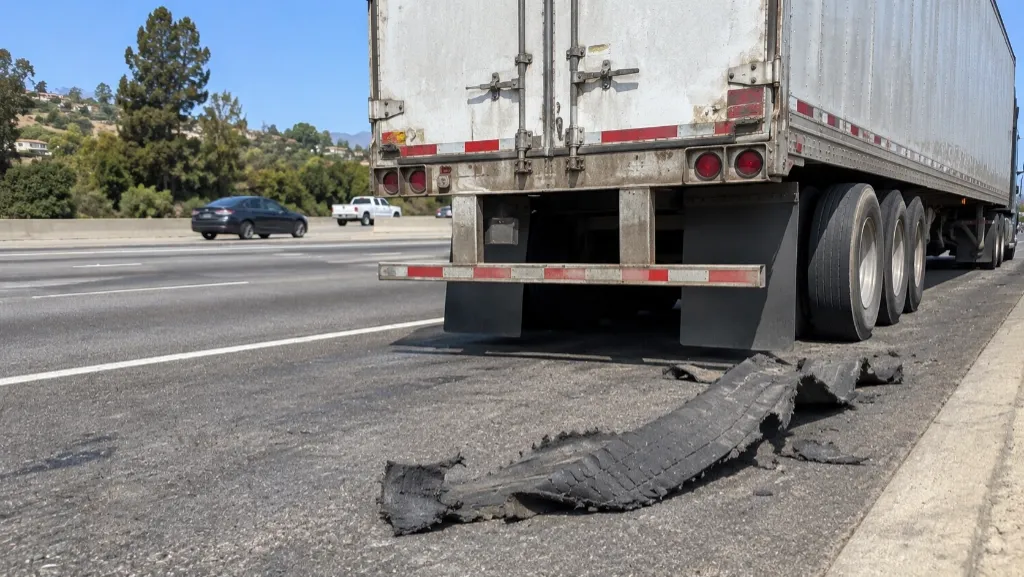
Shredded tread on a freeway shoulder after a big rig blowout, the kind of crash truck tire blowout accident lawyers in California review

Truck Tire Blowout

By | Truck Accidents

Truck Tire Blowout Accident Lawyers in California: Who Is Liable?

When a big rig’s tire fails and causes a crash, several parties may be responsible. They include the trucking company, the driver, a repair shop, the company that loaded the trailer and the tire’s maker. Truck tire blowout accident lawyers in California find out which by checking the tire and the truck’s records.

A blowout at freeway speed can send a truck across lanes or scatter tread over the road. Here is what the federal tire rules require, who may be liable and what evidence to save.

What causes a truck tire blowout?

A truck tire blowout can start with a problem that builds over time. NHTSA’s tire safety guidance names underinflated tires and overloaded vehicles as a major cause of tire failure. Low pressure can also cause heat to build up. Worn tread, cuts, road hazards and factory defects can lead to a failure too.

On a loaded truck, one failed tire can throw heavy tread into the next lane. The cause matters, because it points to whoever should have caught the problem.

What do federal rules require for truck tires?
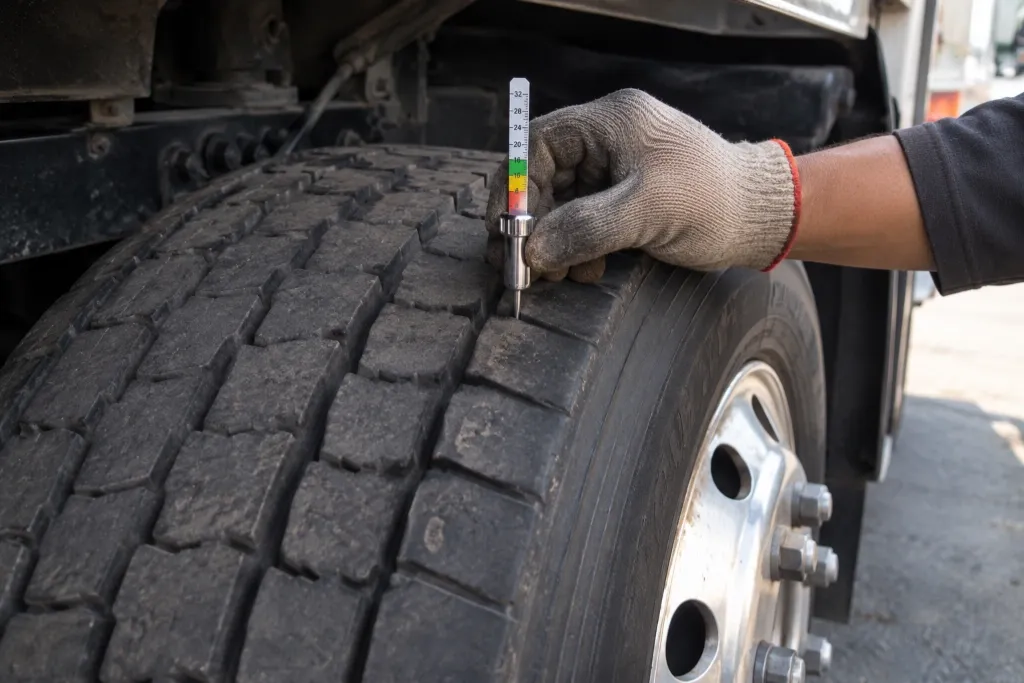
Tread depth gauge measuring the groove of a truck tire

Federal rules bar a truck from running on a damaged tire. That includes exposed belts, tread or sidewall separation, a flat, an audible leak and a cut down to the belts. Under 49 CFR 393.75, front tires also need at least 4/32 of an inch of tread. Other tires need at least 2/32.

The same rule bars running a tire below the cold inflation pressure required for the load. It also bars loading a tire past the weight on its sidewall, except under a special state permit.

Other federal rules cover inspection and repair:

  • Under 49 CFR 396.3, a motor carrier must systematically inspect, repair and maintain its trucks.
  • Under 49 CFR 396.13, the driver must make sure the truck is in safe operating condition before driving it.
  • Under 49 CFR 396.11, a driver reports any defect found at the end of each day’s work. Tires and wheels are on the list.
  • The carrier must then fix any defect likely to affect safety before the truck runs again. Or it must certify that no repair is necessary.
  • Under 49 CFR 396.17, each truck must pass a periodic inspection at least once every 12 months.

A broken rule does not decide a case by itself. Still, under Evidence Code section 669, a safety violation can create a rebuttable presumption of carelessness.

Who can be liable for a truck tire blowout?

Responsibility depends on why the tire failed, and several parties may share it. The motor carrier may answer for poor maintenance and for an employee driver’s conduct on the job. A repair shop, a loader or the company that made or retreaded the tire may also be responsible.

In more detail:

  • The motor carrier, if it skipped inspections or repairs or its employee driver caused the crash.
  • The driver, if a pre-trip check or a daily report should have caught the problem.
  • A maintenance shop or inspector that missed a defect or made one worse.
  • A shipper or loader whose cargo pushed the tires past their rated weight.
  • The company that made, retreaded or sold the tire, if a defect was a substantial factor in your harm.

California uses comparative fault, so any share of blame on your side reduces your damages instead of barring the claim. Viciti Law’s article on contributory fault explains how California left the old all-or-nothing rule behind.

What evidence matters after a blowout?
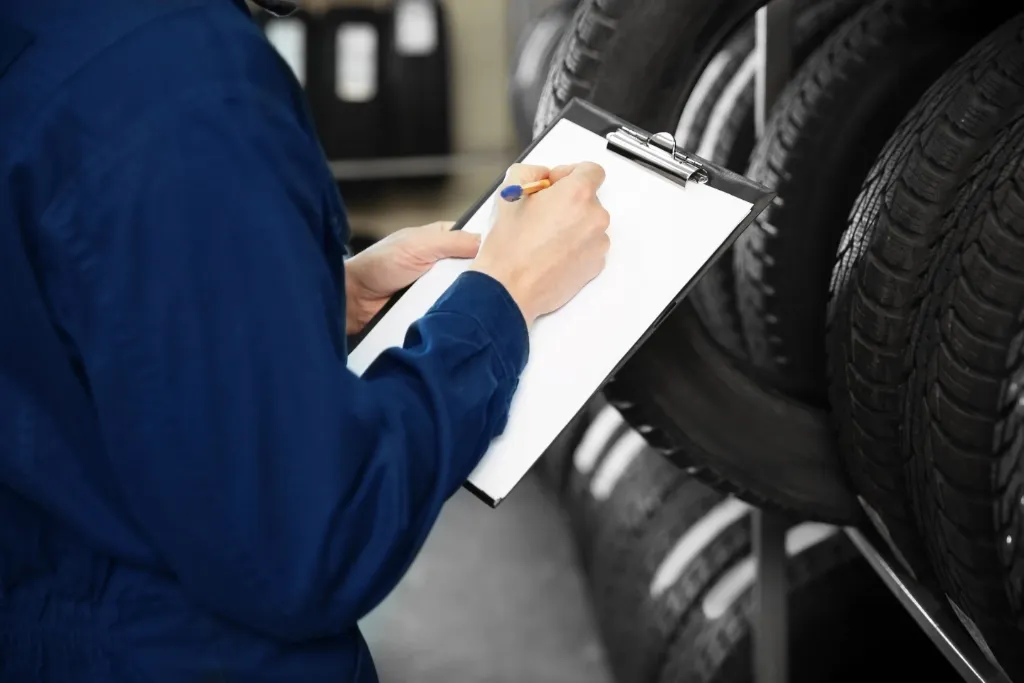
Inspection checklist and maintenance records beside a truck tire in a repair ba

The tire itself matters most, along with every piece of it you can find. Next come the carrier’s maintenance and inspection records, the driver’s reports, the truck’s electronic data and the CHP report. Carriers only have to keep some records for months, so a request to preserve them should go out early.

Federal rules set these minimum record periods:

  • Maintenance records: one year, and six months after the truck leaves the carrier’s control (49 CFR 396.3).
  • Driver inspection reports and repair certifications: three months (49 CFR 396.11).
  • The annual inspection report: 14 months (49 CFR 396.21).

Because those periods are short, truck tire blowout accident lawyers in California often send a preservation letter early. Also gather the CHP report, your photos, any dashcam or business video, and witness names. If you have pieces of the tire, keep them safe and let no one take them without advice.

What if tire debris hit your car?

When a truck sheds tread that hits your car, the carrier or driver may be responsible. The key question is whether poor maintenance caused the failure. If the truck kept going, report it to the CHP right away. Debris left on the road for a long time may also point to a public entity.

So write down the truck’s color, the lane and any company name or numbers you saw. Photograph the debris only if it is safe. Then check your own policy. The California Department of Insurance says collision coverage applies to contact with another vehicle or an object. Your deductible still applies.

For the road itself, Government Code section 835 allows a claim for a dangerous condition of public property. Among other things, the public entity must have created the condition or had notice of it in time to act.

When do truck tire blowout accident lawyers in California get involved?

The earlier, the better, while the tire, the records and any video still exist. A lawyer can send preservation letters, request the CHP report and track your deadlines. For most injury claims, the deadline to file a lawsuit is two years under Code of Civil Procedure section 335.1.

Truck tire blowout accident lawyers in California also check whether a city, county or the state may share the blame. If one does, a written claim is due within six months under Government Code section 911.2. That earlier deadline is easy to miss.

For the wider process, read Viciti Law’s guide to how a truck accident claim works. A Los Angeles truck accident lawyer can also review the records with you.

Frequently asked questions

Is the trucking company always responsible for a blowout?

Not always. The trucking company may be responsible when its own failures caused the crash, such as skipped maintenance. It may also answer for an employee driver at fault on the job. If a factory defect caused the failure, the tire maker may be responsible instead. Sometimes more than one party shares the fault.

Can I bring a claim against the tire manufacturer?

You may, if the tire had a defect when it left the maker’s control. The defect must also have been a substantial factor in your harm. California product liability law can also reach companies that distributed or sold the tire. An engineer may need to examine the tire itself, so keep every piece.

Who investigates a blowout crash on a freeway?

The California Highway Patrol usually investigates crashes on state freeways, including the 101 and the 405 near Sherman Oaks. On city streets such as Ventura Boulevard, the LAPD handles them. The trucking company and its insurer may also investigate, so your own look at the tire and records can help.

How long do I have to file?

For most injury claims, you have two years under Code of Civil Procedure section 335.1. Claims for damage to your car generally have three years under section 338. Against a public entity, a written claim is due within six months under Government Code section 911.2. Federal record periods are much shorter, so act early.

Talk to Viciti Law About a Truck Tire Blowout

If a truck tire blowout or flying tread caused your crash, the records behind it may not last long. To talk it through, contact Viciti Law for a free consultation or call (310) 919-5011.

The office is at 13743 Ventura Blvd, Suite 240, in Sherman Oaks. The firm speaks Spanish and Russian, and it takes each and every case personally.

Book Free Consultation (button, links to /contact-us/)

Past results do not guarantee a similar outcome. This article provides general information about California law and is not legal advice. Reading it does not create an attorney-client relationship. Attorney Advertising.
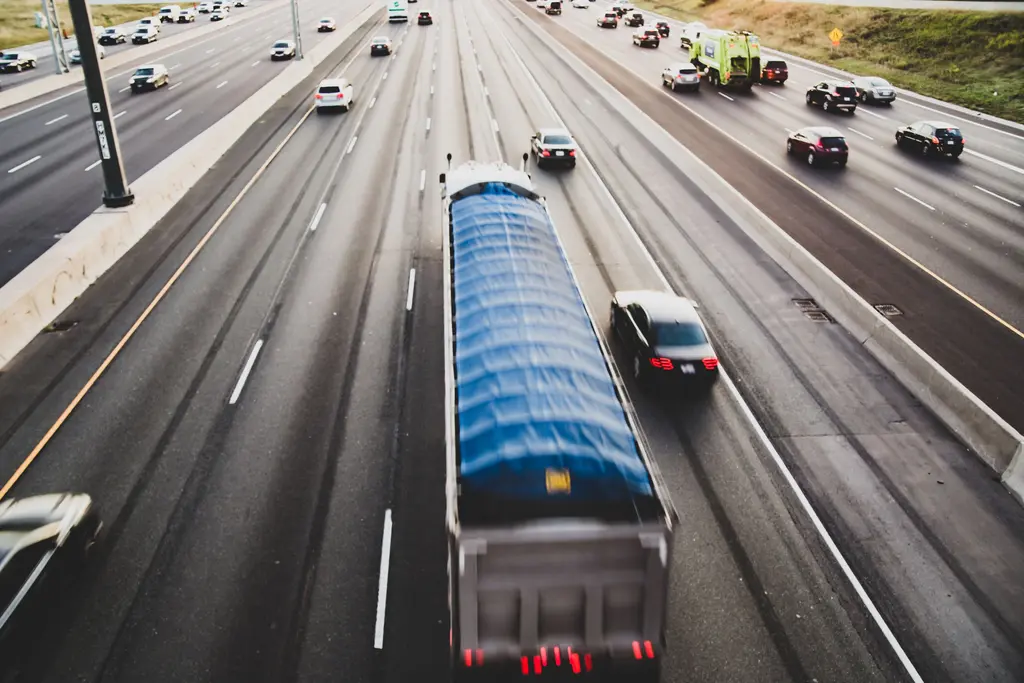
Semi-truck driving in traffic on a Southern California freeway

How a Truck Accident Claim Works in California

By | Truck Accidents

A truck accident claim in California involves investigating the crash, identifying who may be responsible and documenting the injuries and losses before pursuing compensation. These cases can involve several companies and insurers, federal rules governing driving hours and truck maintenance, and trucking records that need to be preserved quickly. Here’s what the process generally involves and why each step matters.

What sets truck accident claims apart?

Like other personal injury cases, truck accident claims seek to hold responsible parties accountable for the harm their carelessness causes. But a crash involving a semi, box truck, delivery truck or dump truck can make the claim more complex than a typical car accident case.

Three things set a commercial truck accident claim apart. More parties may share responsibility, including the driver and the companies behind the truck. Federal rules govern driving hours and truck maintenance, which can become important when investigating the crash. Finally, the trucking company holds many of the key records, and it may keep some for only a few months. Preserving those records quickly can help protect evidence needed for the claim.

Who can be responsible after a truck crash in California?

Several parties can be responsible after a truck crash in California, not just the driver. Depending on the facts, responsibility may extend to the trucking company, the owner of the truck or trailer, the company that loaded the cargo, a repair shop or a parts maker. Each one may have separate insurance coverage, so finding all of them matters.

Possible responsible parties include:

  • Driver: speeding, distraction, fatigue or an unsafe lane change
  • Trucking company: its driver’s conduct on the job, poor hiring or training, or schedules that push drivers past legal limits
  • Truck or trailer owner: when someone other than the carrier owns the equipment and fails to address known safety defects
  • Shipper or loader: overloaded or poorly secured cargo
  • Maintenance company: faulty brake, tire or lighting work
  • Manufacturer: a defective part such as brakes or tires

A Los Angeles truck accident attorney can trace each company tied to the truck and the coverage that may apply.

What evidence matters in a truck accident claim?

Electronic logging device mounted on a truck dashboard

The most important evidence in a truck accident claim is often in the trucking company’s hands. That includes driver logs, electronic logging device data, engine data, and inspection and maintenance files. Because carriers may keep some of these records for only months, an early written request to preserve them can make a real difference.

Key evidence includes:

  • Hours records. Federal rules generally require drivers to log their hours on an electronic logging device (ELD). Under 49 CFR 395.8, the carrier must keep these records for at least six months.
  • Engine data. A truck’s engine control module may store speed and braking data from the moments before impact.
  • Maintenance files. Under 49 CFR Part 396, carriers must inspect, repair and maintain their trucks and keep records of that work. They may keep daily driver inspection reports for only three months.
  • Video. Dashcams and nearby business cameras may help, but many systems record over old video within days.
  • Crash report. CHP officers usually handle crashes on freeways such as the 101 and 405, while LAPD handles most crashes on Los Angeles city streets.
  • Your own records, such as photos, witness names and medical records.

A preservation letter tells the trucking company, in writing, to keep specific evidence. It should go out before routine retention periods end.

How do federal trucking rules affect fault?

Federal trucking rules set safety standards, and a violation may support a finding of fault. For example, a driver who exceeded the hours-of-service limits, or a carrier that ignored a known brake defect, may have acted carelessly. Still, a violation is not automatic proof. It has to connect to how the crash happened.

The Federal Motor Carrier Safety Administration sets hours-of-service limits for drivers who haul property. In plain terms, a driver:

  • may drive up to 11 hours after 10 consecutive hours off duty;
  • may not drive past the 14th hour after coming on duty;
  • must take a 30-minute break after 8 total hours of driving.

Logs that show a driver over these limits may point to fatigue. Likewise, skipped inspections or unrepaired defects may point to the carrier. However, the other side may argue the violation had nothing to do with the crash. That is why a careful review compares logs with engine data, the crash report and witness accounts.

What if you were partly at fault?

You may still bring a claim if you were partly at fault. California follows pure comparative negligence, a rule the state Supreme Court adopted in Li v. Yellow Cab Co. (1975). Your share of fault reduces your damages, but it does not bar them. For example, a finding of 20 percent fault reduces your damages by 20 percent.

After a truck crash, the other side may argue that you cut off the truck or stayed in its blind spot. Those arguments can shift the percentages, so the evidence above matters. Also, an adjuster’s first estimate of fault is only an opinion.

What happens after the crash investigation?

Your attorney documents your injuries and losses, identifies available insurance coverage and presents a demand for compensation. Medical records, bills and proof of missed work help support that demand. The insurer may respond with an offer, dispute responsibility or request more information.

Negotiations may lead to a settlement. If an agreement cannot be reached, or a filing deadline is approaching, your attorney may file a lawsuit. Both sides can then obtain evidence through discovery. Settlement discussions can continue during the lawsuit, and unresolved issues may go to trial.

How long do you have to file after a truck crash in California?

Attorney and client reviewing a truck accident claim file at a desk

In California, you generally have two years from the date of injury to file a personal injury lawsuit, under Code of Civil Procedure section 335.1. A family’s wrongful death suit generally has the same two-year limit. If a government agency owned the truck, a much shorter deadline applies.

Under Government Code section 911.2, you must generally present a written claim to a public entity within six months of an injury or death. That rule can apply to a city trash truck, a county work truck or a state maintenance vehicle. So find out who owned the truck right away.

Frequently Asked Questions

Is a truck accident claim different from a car accident claim?

Yes. Truck claims follow the same basic fault rules, but they often involve more companies, federal safety requirements, and evidence controlled by the trucking company.

What if the truck driver was an independent contractor?

The trucking company may still be responsible. Calling a driver an independent contractor does not settle who answers for the crash. Under federal leasing rules in 49 CFR 376.12, a lease must give the carrier exclusive possession, control and use of the truck. It must also make the carrier fully responsible for operating it during the lease. The contracts and who controlled the work may also matter.

Can the trucking company’s adjuster call me?

Yes. An adjuster working for the trucking company or its insurer may call you soon after the crash, sometimes while you are still in treatment. You do not have to give that adjuster a recorded statement. The other side may use anything you say to argue about fault or your injuries. Instead, you can politely decline and refer the call to your lawyer.

How long does a truck accident claim take?

It varies, and no one can promise a timeline. A claim with clear fault and finished medical treatment may move faster than one with several companies, disputed logs or ongoing care. Many claims wait until doctors have a clear picture of recovery. If a lawsuit goes forward in Los Angeles Superior Court, the court calendar adds more time.

Talk to Viciti Law About Your Truck Crash

If you or a family member was hurt in a crash with a commercial truck, Viciti Law offers a free consultation. The firm can review the crash report, send preservation letters and explain your options.

Call (310) 919-5011, visit the office on Ventura Boulevard in Sherman Oaks, or contact Viciti Law online. The team speaks English, Spanish and Russian, and it takes each and every case personally.

Book Free Consultation

Past results do not guarantee a similar outcome. This article provides general information about California law and is not legal advice. Reading it does not create an attorney-client relationship. Attorney Advertising.