
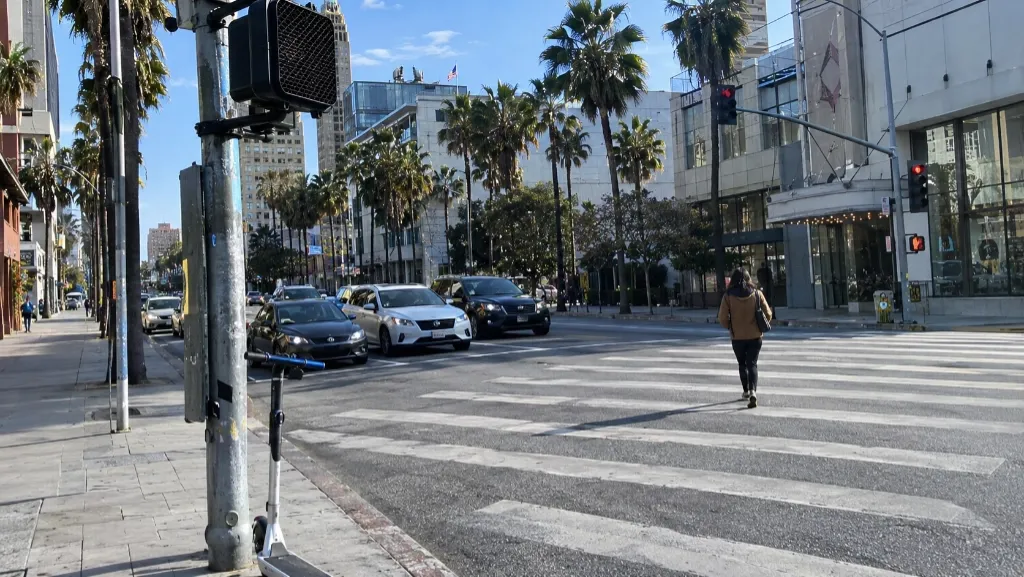
I Got Hit by a Car While Walking: What to Do Next in California
If you got hit by a car while walking, get medical care first. Then collect the driver’s information and call the police so there is a report. California drivers must yield to pedestrians in crosswalks, and even outside one, you may still have a claim.
This post covers the crosswalk rules, the Freedom to Walk Act, hit-and-run crashes, city streets and the deadlines that apply.
What should you do if you got hit by a car while walking?
Call 911 and get medical care, even if you feel fine. If you can, get the driver’s name, address, plate number and insurance details. Take photos and ask witnesses for their contact information. The driver has legal duties as well, starting with the duty to stop and share information.
Under Vehicle Code sections 20001 and 20003, a driver in an injury crash must stop at the scene. The driver must give their name, address and registration number, and give reasonable help to anyone hurt.
In the days after, a few steps protect your claim:
- Keep every medical record, bill and discharge paper.
- Write down where you were walking, what the signal showed and which way the car turned.
- Look for video from doorbells, dashcams and businesses nearby, which may not be kept long.
- Get the report number from the LAPD or the CHP.
On Ventura Boulevard, the LAPD usually takes the report, while the CHP handles the 101 and the 405. Viciti Law’s pedestrian accident attorneys can help gather this evidence.
Who has the right of way at a crosswalk?
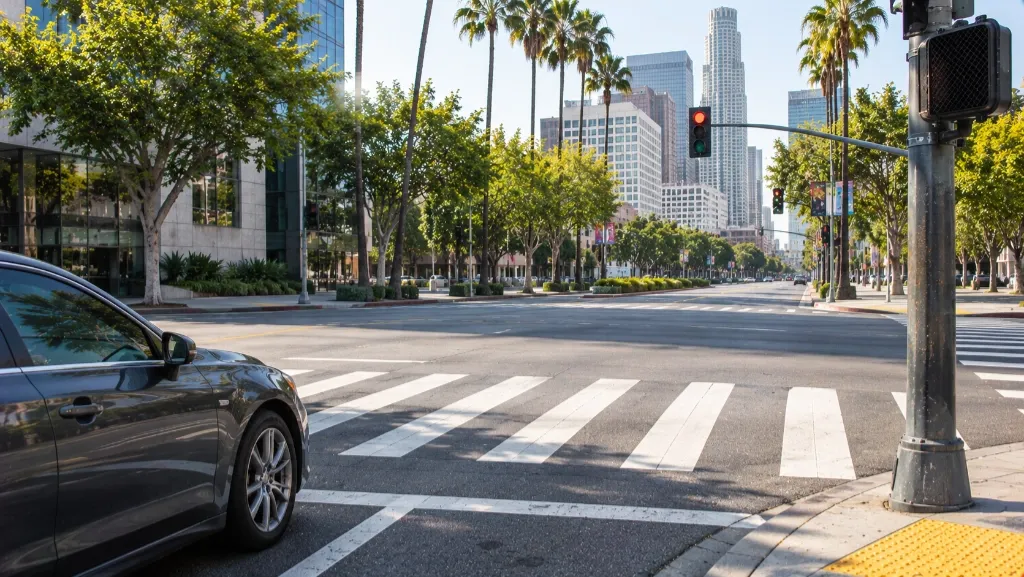
Pedestrians do. Under Vehicle Code section 21950, a driver must yield to a pedestrian crossing in a crosswalk. That covers marked crosswalks and unmarked crosswalks at intersections. The driver must also use all due care and slow down, or take other action, as needed to keep the pedestrian safe.
An unmarked crosswalk is easy to miss. Under Vehicle Code section 275, it is where the sidewalk lines would extend across an intersection. So many corners where streets meet at about a right angle have a crosswalk even without paint.
The right of way has limits. Section 21950 also bars a pedestrian from suddenly stepping into the path of a car that is an immediate hazard. Even so, that rule does not excuse the driver from using due care.
Can you bring a claim if you were not in a crosswalk?
Yes, you may. Outside a crosswalk, Vehicle Code section 21954 says a pedestrian must yield to vehicles close enough to be an immediate hazard. But the same section keeps the driver’s duty to use due care for any pedestrian on the road. From there, each person’s share of fault depends on what they did.
The rules changed in 2023. The Freedom to Walk Act, AB 2147, took effect January 1, 2023, and amended sections 21950, 21954 and 21955. Under Vehicle Code section 21955, pedestrians between two signal-controlled intersections still must cross in a crosswalk. But an officer may not stop a pedestrian for crossing elsewhere unless there is an immediate danger of a collision. The test is what a reasonably careful person would realize.
The change did not remove anyone’s duty of care. Each amended section says the pedestrian and the driver still have to use due care.
California’s pure comparative fault rule then applies. Since Li v. Yellow Cab Co. (1975), your share of fault reduces what you can recover. It does not bar the claim, so a pedestrian who crossed mid-block may still have a claim against a speeding driver.
What if the driver left the scene?
Leaving the scene of an injury crash is a crime under Vehicle Code section 20001. For your claim, the questions become whether police can find the driver and whether your own uninsured motorist coverage applies. Report the crash to the police right away, because that coverage has strict reporting rules for hit-and-run crashes.
Under Insurance Code section 11580.2, an unidentified driver counts as uninsured only when the car made physical contact with you. You, or someone for you, must report the crash within 24 hours to the city police, the sheriff or the CHP. Then you must file a sworn statement with your insurer within 30 days. Miss either step, and the coverage may not apply.
If police later find the driver, the driver’s own liability coverage may apply instead.
What if a city street or sidewalk played a part?
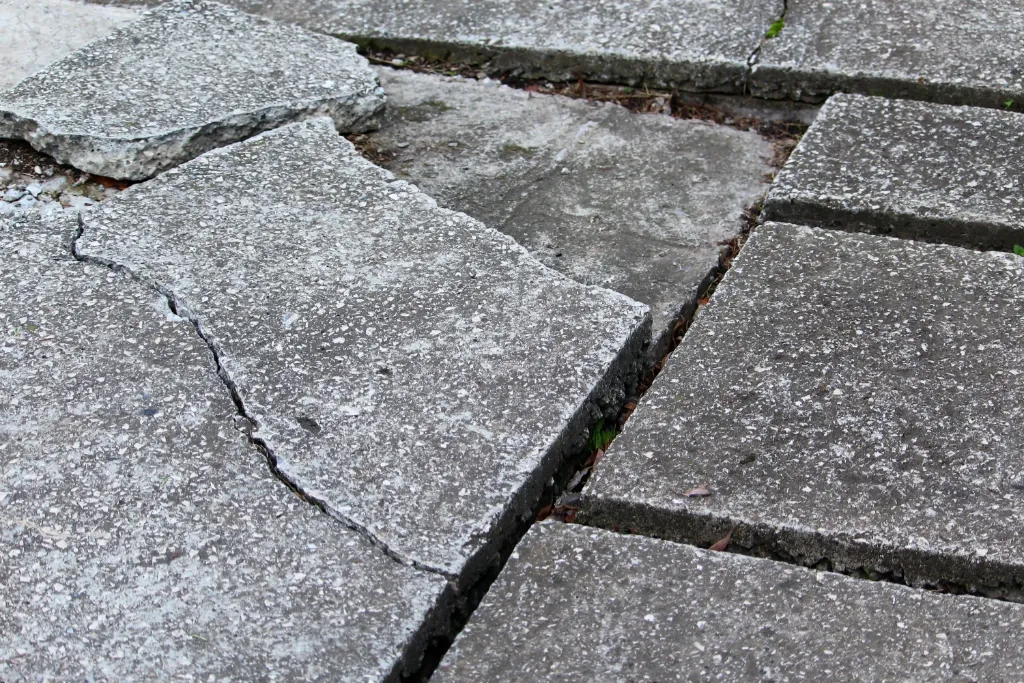
A public entity, such as a city or county, may share responsibility if a dangerous condition of its property contributed to the crash. Possible examples include a signal that was not working or a sidewalk hazard that forced you into the street. These claims follow special rules, starting with a written claim due within six months.
Government Code section 835 sets out when a public entity is liable for a dangerous condition of its property. You must show that the property was dangerous at the time and that the condition caused the injury. The risk must also have been foreseeable. Finally, an employee must have created the condition, or the entity had notice in time to guard against it.
Before any lawsuit, Government Code section 911.2 requires a written claim within six months for an injury claim. Viciti Law’s guide to the California Tort Claims Act explains how these claims work.
How long do you have to file?
For most injury lawsuits against a driver, you have two years under Code of Civil Procedure section 335.1. A claim against a public entity has a much shorter first step, a written claim within six months. Uninsured motorist claims have their own two-year rule, and hit-and-run coverage needs a police report within 24 hours.
Under Insurance Code section 11580.2, an uninsured motorist claim needs one of three things within two years of the crash. You can sue the uninsured driver, agree with your insurer on the amount, or start arbitration by written notice.
Frequently asked questions
Does my own car insurance apply if I was walking?
It may. Under Insurance Code section 11580.2, the named insured and spouse count as insureds for uninsured motorist coverage. Relatives in the household count “while occupants of a motor vehicle or otherwise,” so you do not need to be in a car. Your coverage may apply after an uninsured or hit-and-run driver hits you, under your policy’s terms.
What if I was hit in a parking lot?
You may still have a claim. Even where the crosswalk rules do not fit, Civil Code section 1714 still applies. It makes everyone responsible for injuries caused by a lack of ordinary care, including drivers in a parking lot. The property owner may also share responsibility if the lot itself was unsafe, for example because of poor lighting.
I got hit by a car but feel fine. Do I still need a doctor?
Yes, get checked. The CDC says concussion symptoms may not show up right away and can take hours or days to appear. A prompt visit also creates a record that ties any injury to the crash. Viciti Law’s post on the signs of a concussion explains the danger signs the CDC lists.
Should I talk to the driver’s insurance company?
You can report the claim, but think before you give a recorded statement. The driver’s adjuster works for the driver’s insurer and may ask where you were walking or what you saw. Talking with a lawyer first can help you answer accurately and avoid guessing about speed, distance or fault.
Talk to Viciti Law About a Pedestrian Accident
If you got hit by a car while walking, get a second look at the facts. The same goes if a driver’s insurer has blamed you for where you crossed. To talk it through, contact Viciti Law for a free consultation or call (310) 919-5011.
The office is at 13743 Ventura Blvd, Suite 240, in Sherman Oaks. The firm speaks Spanish and Russian, and it takes each and every case personally.
Book Free Consultation (button, links to /contact-us/)
Past results do not guarantee a similar outcome. This article provides general information about California law and is not legal advice. Reading it does not create an attorney-client relationship. Attorney Advertising.
