
Contributory Fault in California: Can You Recover If You Were Partly to Blame?
Yes. California dropped the old contributory fault rule in 1975, so being partly to blame does not bar your claim. Instead, your own share of fault reduces your damages, even if your share is larger than the other side’s.
If an adjuster has said you were partly at fault for a crash or a fall, this guide explains what that means. It also covers who decides the percentages, which claims the rule reaches and what can lower your share.
What is contributory fault?
Contributory fault, usually called contributory negligence, was an all-or-nothing rule. It barred any recovery if the injured person shared any of the blame. Under it, a driver who was 1 percent at fault could recover nothing. The California Supreme Court replaced that rule in Li v. Yellow Cab Co. in 1975, and it no longer applies here.
In Li, the court adopted a pure form of comparative negligence. Your own negligence no longer bars recovery. Instead, your damages shrink in proportion to your share. The basic duty still comes from Civil Code section 1714, which makes everyone responsible for harm their lack of ordinary care causes.
You may still hear the old term from an adjuster. After a crash, many people also ask, is California a no-fault state? It is not, and fault decides who is responsible.
How does comparative fault work in California?
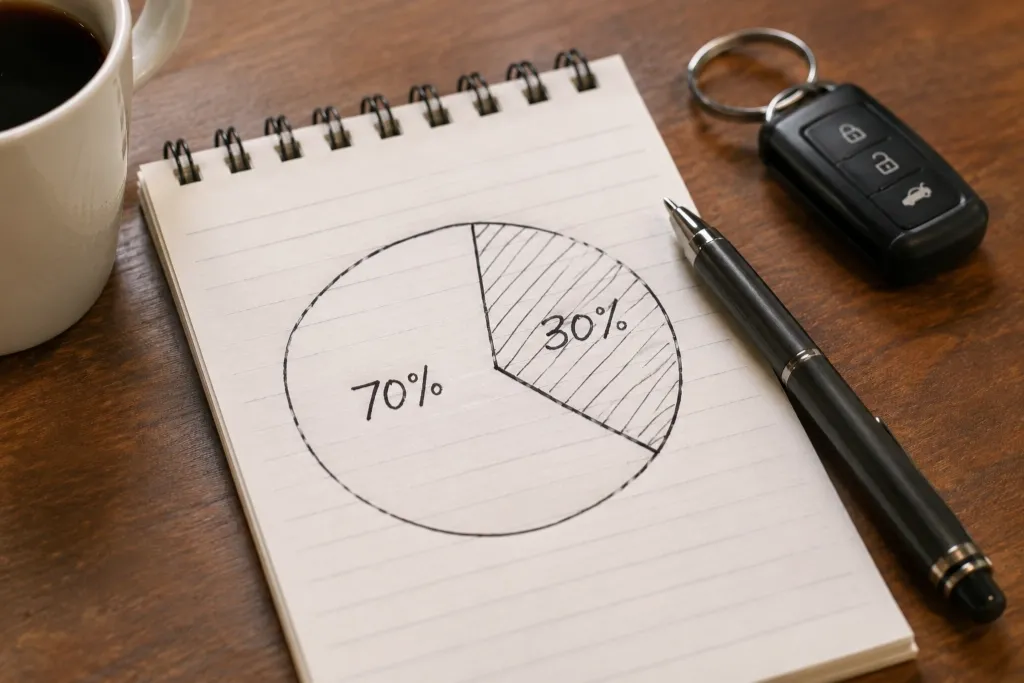
Comparative fault gives each person a percentage of the blame, and your damages go down by your own percentage. If you were 25 percent at fault, you can still recover 75 percent of your damages. Your share lowers the amount, but it does not close the door, even when it is the larger share.
For example, say you trip on a broken step at a store while carrying a box that blocks your view. Suppose a jury finds the owner 70 percent at fault for the step. It finds you 30 percent at fault for not seeing the step. The judge then reduces your damages by 30 percent.
That percentage applies to your total damages, not to a single bill. So it reaches medical expenses, lost earnings and pain and suffering alike.
The same math applies after a T-bone car accident where one driver ran a red light and the other was speeding.
Who decides the percentages?
If a case goes to trial, the jury decides. Under CACI 405, the standard California jury instruction, the defense must prove that you were negligent and that your negligence was a substantial factor in causing your harm. The jury then sets your percentage, and the judge calculates the reduction.
Before trial, an adjuster may propose a split. That number is the insurer’s position, not a finding, and it may change as evidence comes in. Each side can point to the same evidence a jury would weigh, so the facts matter long before any trial. When several people share the blame, a related instruction, CACI 406, asks the jury to assign percentages that total 100 percent.
Does comparative fault apply to every kind of injury claim?
It applies to negligence claims, such as car crashes and falls on someone else’s property. In a 1978 decision, the California Supreme Court extended comparative fault to strict product liability claims. So a person hurt by a defective product can have their recovery reduced by their own fault, but not barred.
Premises claims rest on the same section 1714, which covers how people manage their property. Passengers and pedestrians fall under the same rule, too. A passenger who did nothing to cause a crash may carry no share at all. A pedestrian’s share, if any, depends on the facts, such as where and how they crossed. In each case, the defense has to prove the injured person’s carelessness.
How is fault split when several people share it?
When more than one person shares the blame, the jury gives each a percentage, and the percentages total 100 percent. Your own share comes off first. Then Civil Code section 1431.2, adopted by Proposition 51, limits each defendant’s liability for non-economic damages, such as pain and suffering, to its own share. Economic damages follow a different rule.
What can lower your share of fault?
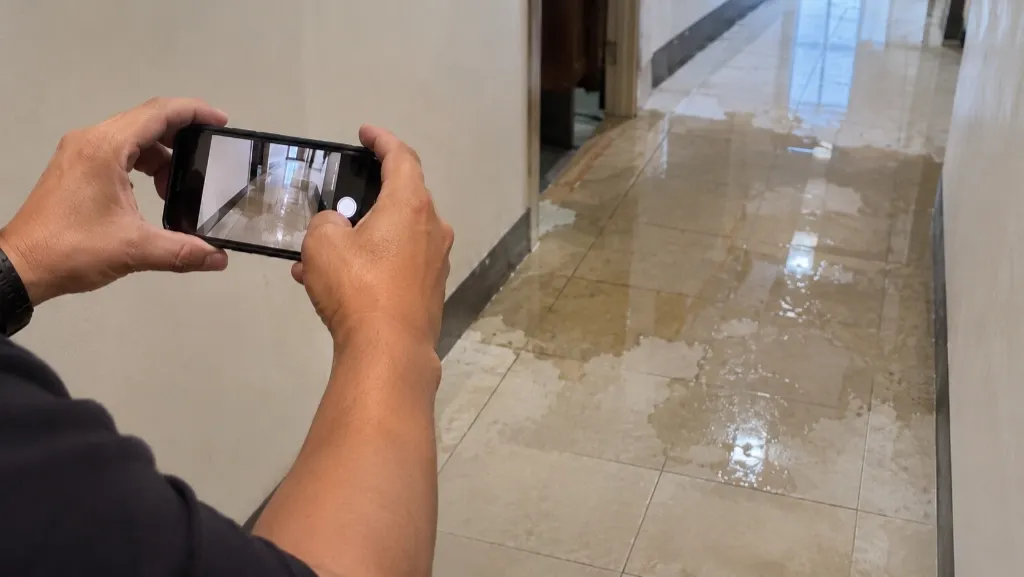
Evidence. Because the defense has to prove your share, facts showing you acted with reasonable care can keep it small or remove it. Photos, video, witness accounts, the police report and records made at the time can carry more weight than anyone’s memory months later.
- Photos of the scene, the vehicles, the lighting and any hazard, taken as soon as you can.
- Video from dashcams, doorbells or nearby businesses, which may not stay on file for long.
- Names and phone numbers of witnesses.
- The police or CHP report, and any incident report the property owner made.
- Medical records that show when you sought care and what you reported.
For a fall, the condition of the floor and how long a hazard sat there may matter as much as where you were looking. For a crash, the other driver’s speed, signals and phone use count too. It also helps to write down what you remember soon after, while the details are fresh. A personal injury lawyer in Los Angeles can help gather that evidence before it disappears.
Frequently asked questions
Can I recover if I was more than half at fault?
Yes. California follows pure comparative fault, so there is no 50 percent cutoff. If you were 60 percent at fault, you can still recover 40 percent of your damages. Li v. Yellow Cab Co. adopted the pure form, which applies even when your share is larger than the other side’s.
Does not wearing a seat belt count against me?
It can. Under Vehicle Code section 27315, skipping a seat belt does not count as negligence in itself in a civil case. Still, the defense may try to prove it as a fact. Under CACI 712, it must show a working belt was available, a careful person would have worn it, and wearing it would have prevented or reduced your injuries.
Will my statement to the adjuster affect fault?
It can. Under Evidence Code section 1220, the other side can offer your own statements against you if the case goes to court. A quick “I didn’t see them” in a recorded call can become part of the fault argument. So before you give a recorded statement to the other side’s insurer, consider speaking with a lawyer.
How long do I have to file?
For most personal injury claims, the deadline is two years from the injury under Code of Civil Procedure section 335.1. Property damage claims generally have three years under section 338. If a public entity is involved, a written claim is due within six months under Government Code section 911.2. Your share of fault does not change these deadlines.
Talk to Viciti Law About Contributory Fault
If an adjuster has put part of the blame on you, that number is not the last word. Viciti Law can review the report, the photos and the adjuster’s numbers with you. To talk through the facts, contact Viciti Law for a free consultation or call (310) 919-5011.
The office is at 13743 Ventura Blvd, Suite 240, in Sherman Oaks. The firm speaks Spanish and Russian, and it takes each and every case personally.
Book Free Consultation (button, links to /contact-us/)
Past results do not guarantee a similar outcome. This article provides general information about California law and is not legal advice. Reading it does not create an attorney-client relationship. Attorney Advertising.