Is Lane Filtering Legal in California? What Riders and Drivers Should Know
Generally, yes. Lane filtering is legal in California because riding between stopped cars fits the Vehicle Code’s definition of lane splitting. The CHP states that lane splitting is legal, but every other traffic rule still applies.
This post looks only at filtering. It covers the legal definition, the CHP tips that fit stopped traffic, fault and what drivers should do. For splitting lanes in moving traffic, see Viciti Law’s guide to lane splitting in California.
Is lane filtering legal in California?
California law treats riding between stopped cars as lane splitting. Vehicle Code section 21658.1 defines lane splitting as riding a motorcycle between rows of stopped or moving vehicles in the same lane. The word filtering does not appear in the statute, but stopped traffic falls inside the definition.
The CHP’s motorcycle safety page says plainly that lane splitting by motorcyclists is legal in California. Still, the definition does not suspend any other rule. You must stop for a red light. Under Vehicle Code section 22107, you may move over only when it is reasonably safe, with a signal if others may be affected.
The definition also has a limit. It requires two wheels in contact with the ground, so a three-wheeled motorcycle falls outside it.
What is the difference between lane filtering and lane splitting?
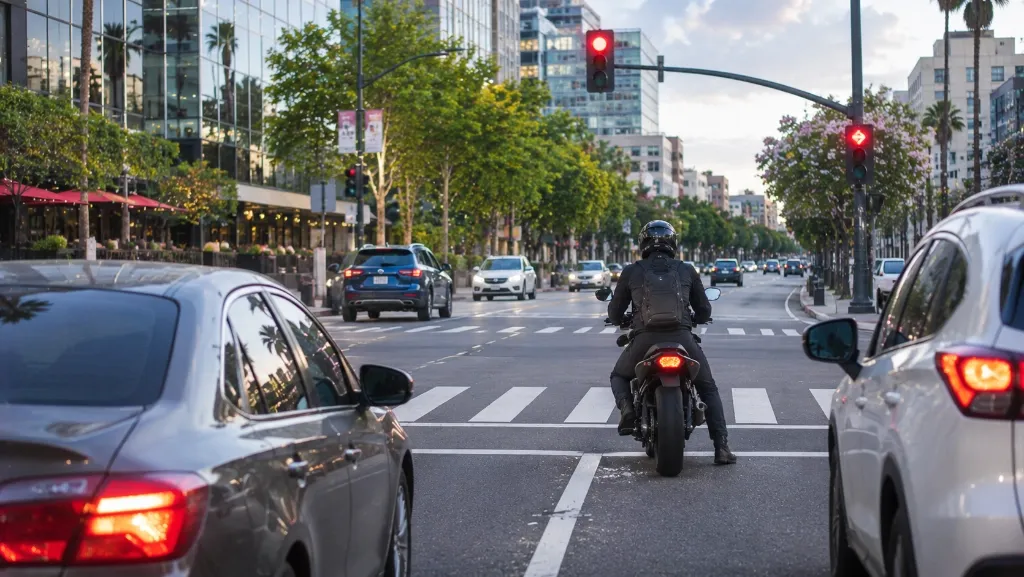
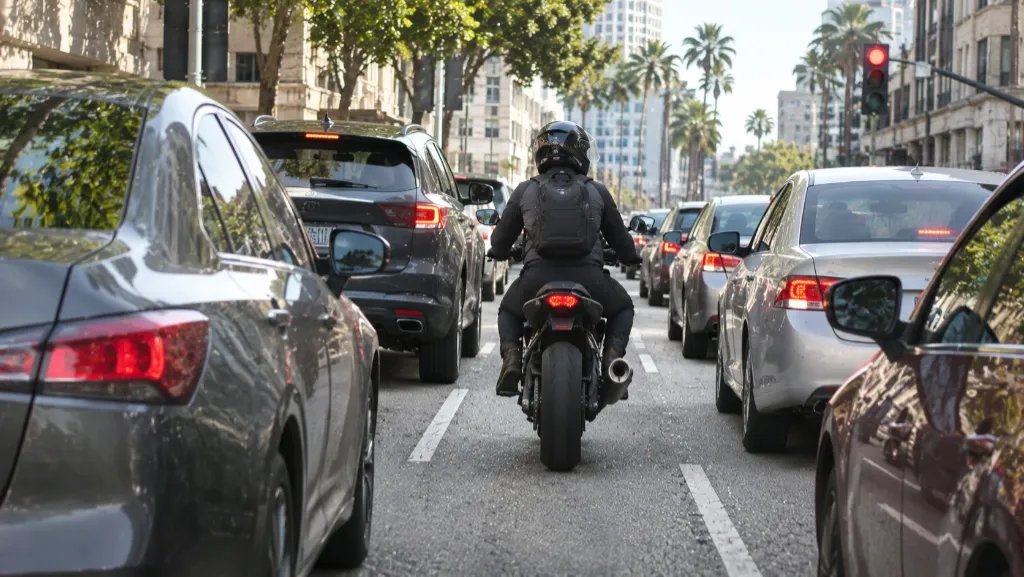
Riders usually say filtering when they mean moving between stopped cars. Often the goal is the front of the line at a light. Splitting usually means riding between lanes of moving traffic, as on a freeway. California law draws no line between the two, since the statute covers both stopped and moving vehicles.
The difference still matters on the street. Around a filtering rider, drivers are waiting, watching the signal and sometimes looking at a phone. When the light changes, cars that sat still start to move at once. So the risks shift from speed to timing: doors, sudden lane changes and drivers creeping toward a gap.
On Ventura Boulevard, buses, box trucks and turn lanes can narrow those gaps without warning.
What does the CHP say about riding between cars safely?
The CHP’s lane splitting tips do not mention filtering by name, but several fit stopped traffic. The CHP asks riders to consider the whole environment, including lane widths and the size of nearby vehicles. It warns against lingering in blind spots or between vehicles, and it says danger increases at higher speed differences.
Applied to a line of cars at a red light, those tips point to a few habits:
- Check the width of the gap and the vehicles on each side before you enter it.
- Skip gaps beside big rigs, buses and motorhomes, which the CHP lists as vehicles to avoid splitting next to.
- Keep moving through the line instead of stopping beside a driver’s door or mirror.
- Wear bright or reflective gear, and use your high beam in daylight, as the CHP suggests.
The CHP also says inexperienced riders should not split lanes. Its page gives no speed figure, and neither does the statute. The CHP adds that its tips cannot make splitting safe in every case. Each rider stays responsible for their own choices.
Who is at fault when a filtering rider is hit?
Fault goes to whoever failed to use reasonable care, and filtering alone does not make the rider that person. A driver who changes lanes into a rider, opens a door or swings out to turn may be at fault. A rider who darts through a narrow gap or enters on a red light may share the blame.
Several Vehicle Code rules come up in these crashes. Section 22107 bars moving right or left until it is reasonably safe. Section 22517 bars opening a door on the traffic side unless it is reasonably safe. The CHP adds that intentionally blocking a rider in a way that could cause harm is illegal.
California’s pure comparative fault rule then divides responsibility. Under Li v. Yellow Cab Co. (1975), your own share of fault reduces what you can recover. Even a large share does not bar the claim. For how these rules play out in other crashes, see Viciti Law’s guide to a motorcycle vs. car accident.
What should drivers do around a filtering motorcycle?
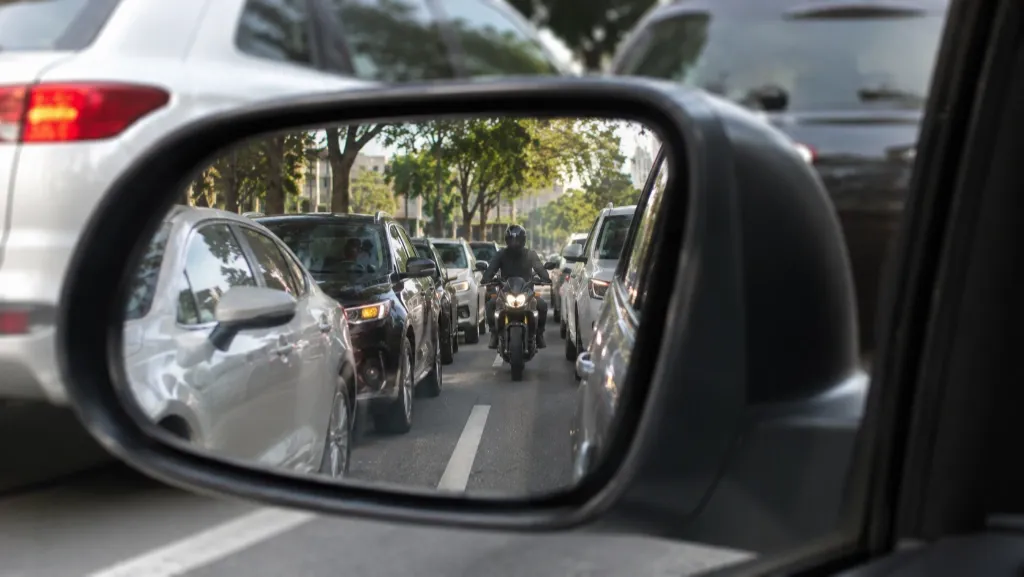
Drivers should expect motorcycles to pass between cars at a light and leave them room. Check your mirrors and blind spots before you change lanes or turn, and signal first, as the CHP advises. Stay in your lane while stopped, and never open a door or shift over to block a rider.
The door rule reaches passengers as well. Section 22517 applies to any person, not only the driver. So a passenger getting out at a light has to look before opening a door on the traffic side.
On multilane roads, the CHP also asks drivers in the far left lane to move left within their lane to make room.
What should a rider do after a lane filtering crash?
Get to a safe spot, call 911 if anyone is hurt and get medical care. Then focus on three facts: where your motorcycle was in the line, which vehicle moved and what the signal showed. Those details fade fast, so write them down the same day.
Evidence that often matters after a filtering crash includes:
- Photos of the lane, the gap and where each vehicle stopped.
- The signal phase, which video or a witness may confirm.
- Video from dashcams, doorbells and businesses near the intersection.
- Witness names, including people in nearby cars.
- The LAPD or CHP report number. On Ventura Boulevard, the LAPD usually takes the report.
Each driver must report an injury crash to the CHP or city police within 24 hours, under Vehicle Code section 20008. Before you give a recorded statement to the driver’s insurer, talk with a motorcycle accident lawyer in Los Angeles.
Frequently asked questions
Can I filter to the front at a red light?
Generally, yes, because riding between stopped cars fits the lane splitting definition. Under Vehicle Code section 21453, you still stop at the limit line, or before the crosswalk if there is none. So the front of the line is the limit line, not the crosswalk. From there, you wait for the green like everyone else.
Is riding on the shoulder the same as filtering?
No. The CHP says riding on the shoulder is illegal and is not considered lane splitting. Filtering means riding between rows of vehicles in the same lane. Using the shoulder to pass stopped traffic may lead to a ticket. It may also come up later in any dispute over fault.
Does filtering make a rider automatically at fault?
No. The CHP treats lane splitting as legal. So filtering alone is not a violation that triggers the presumption of carelessness in Evidence Code section 669. Fault depends on what each person did, such as a sudden lane change or a rider’s choice of gap. Any share assigned to you reduces your recovery without barring it.
How long do I have to file?
For most injury lawsuits, you have two years under Code of Civil Procedure section 335.1. Against a city or other public entity, Government Code section 911.2 requires a written claim within six months. Uninsured motorist claims have a separate two-year rule in Insurance Code section 11580.2.
Talk to Viciti Law About a Lane Filtering Crash
If a driver hit you while you were filtering, get a second look at the facts. The same goes if an adjuster doubts that lane filtering is legal in California. To talk it through, contact Viciti Law for a free consultation or call (310) 919-5011.
The office is at 13743 Ventura Blvd, Suite 240, in Sherman Oaks. The firm speaks Spanish and Russian, and it takes each and every case personally.
Book Free Consultation (button, links to /contact-us/)
Past results do not guarantee a similar outcome. This article provides general information about California law and is not legal advice. Reading it does not create an attorney-client relationship. Attorney Advertising.