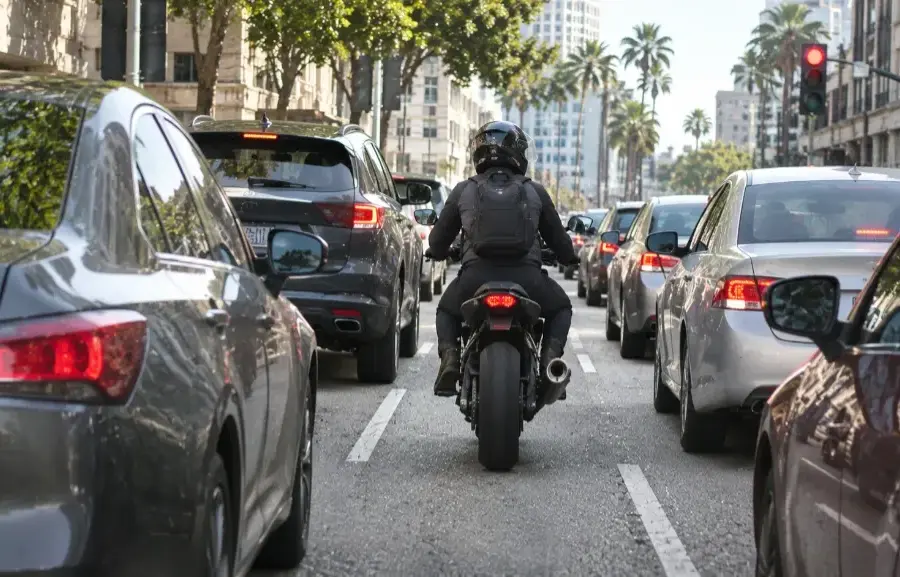
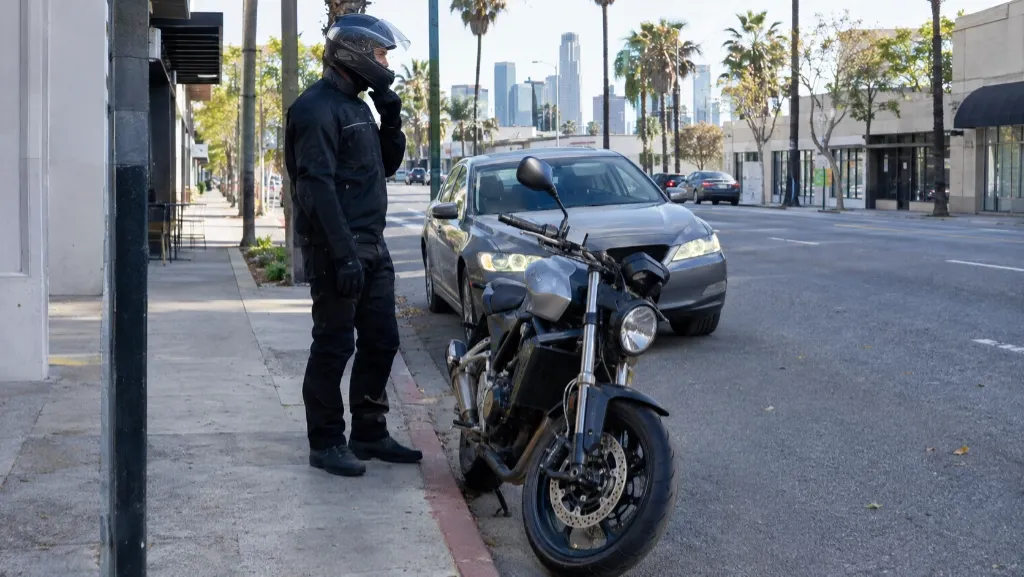
Motorcycle vs. Car Accident in California: Fault, Injuries and Claims
In a motorcycle vs. car accident in California, fault belongs to whoever failed to use reasonable care. Riding a motorcycle does not make you that person, and the evidence decides it. Even if you share some of the blame, you can still bring a claim, reduced by your share.
This post covers the crashes riders see most often, the rules behind them, helmet questions and the coverage that may apply.
Who is at fault in a motorcycle vs. car accident?
The person who did not use ordinary care is at fault, whether that is the driver, the rider or both. Civil Code section 1714 makes everyone responsible for injuries caused by their lack of ordinary care. No rule presumes that a rider caused the crash. Instead, the question is what each person did in the moments before it.
California also uses pure comparative fault. Since Li v. Yellow Cab Co. (1975), your own share of fault reduces what you can recover, but it does not bar the claim. Viciti Law’s post on contributory fault explains how the old all-or-nothing rule worked.
Traffic laws carry weight, too. Under Evidence Code section 669, breaking a safety law can create a presumption of carelessness. Even so, the other side can try to rebut it.
After a freeway crash on the 101 or the 405, the report usually comes from the CHP. On city streets, it comes from the LAPD. That report is one piece of evidence, not the final word on fault.
What are the most common crashes between motorcycles and cars?
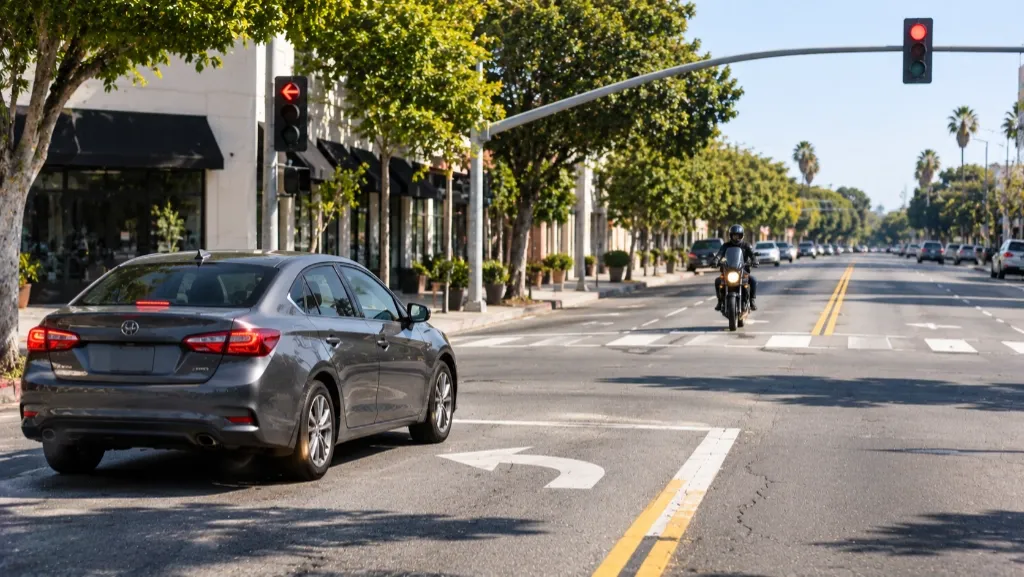
Many of these crashes follow a few patterns. A driver turns left across a rider’s path or changes lanes into the rider. Other times, someone opens a door into traffic, or a driver rear-ends a rider who has slowed. For each pattern, the Vehicle Code says what the driver should have done.
- Left turns. Under Vehicle Code section 21801, a left-turning driver must yield to oncoming vehicles close enough to be a hazard.
- Lane changes. Section 21658 requires a driver to stay within one lane as nearly as practical. A driver may move over only when it is reasonably safe, and section 22107 adds a signal when other traffic may be affected.
- Doors. Under section 22517, no one may open a door on the traffic side unless it is reasonably safe.
- Rear-end crashes. Section 21703 bars following more closely than is reasonable and prudent.
These rules apply to riders as well. A rider who changes lanes without room or follows too closely faces the same standards.
How do assumptions about riders affect a claim?
A driver, a witness or an adjuster may assume that a rider was speeding or weaving before the crash. An assumption is not evidence, though. The claim turns on what the photos, the damage, the video and the witnesses show. That proof can confirm or contradict what anyone assumed about the rider.
For example, a driver may say the motorcycle came out of nowhere. Yet video, measurements or witnesses may show the headlight and how long the bike was in view. The real question is whether the driver looked and yielded, not what the other person rode.
Does a helmet affect a motorcycle claim?
Under Vehicle Code section 27803, every rider and passenger on a motorcycle must wear a safety helmet that meets state standards. Riding without one does not shift the blame for the crash onto you. However, the other side may argue that a missing helmet made a head injury worse.
That argument has limits. Evidence Code section 669 ties a violation to the kind of harm the law was meant to prevent. A missing helmet has nothing to do with how a driver turned or merged. So whether a helmet would have lessened a particular injury is a question for the evidence.
Keep your helmet, jacket and gloves after a crash, without repairing or cleaning them. The gear can help show where the impact happened.
What evidence helps a rider?
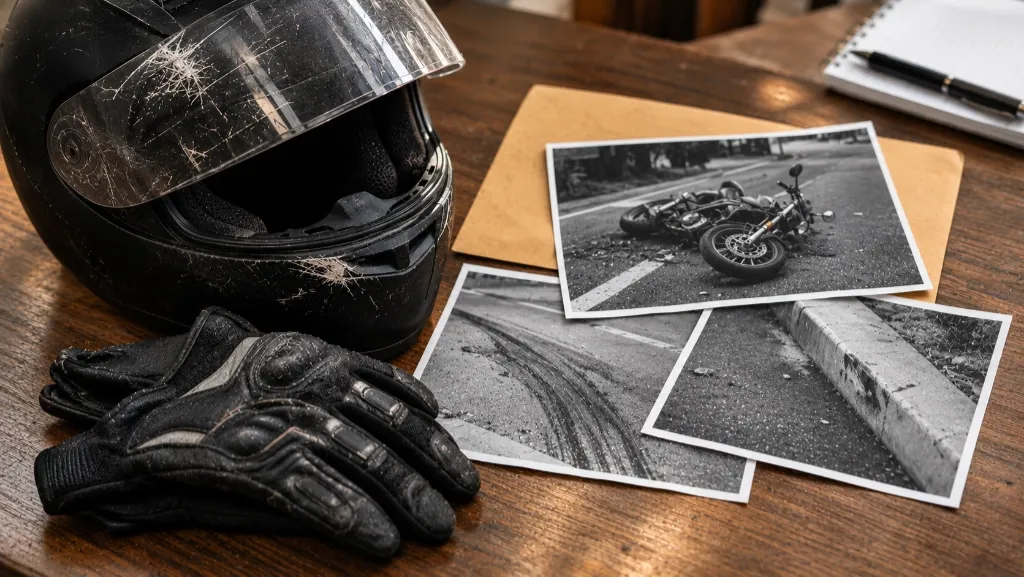
After a motorcycle vs. car accident, the evidence that helps most shows where each vehicle was and what each person did. Photos, video, witness accounts and the damage to both vehicles tell that story. Much of it disappears quickly, so collecting it early keeps the focus on facts.
- Photos of the scene, both vehicles, the lane markings and any signals.
- Video from dashcams, doorbells or businesses, which may not be kept long.
- Names and phone numbers of witnesses.
- The CHP or LAPD report number.
- Your helmet, your gear and the motorcycle, left as they are.
- Medical records from the first visit forward.
If anyone is hurt, each driver must report the crash to the CHP or the city police within 24 hours. That rule is Vehicle Code section 20008. Then get checked by a doctor, even if you feel fine, and talk with a lawyer before any recorded statement.
What coverage may apply after a motorcycle crash?
Several coverages may apply, depending on fault and the policies involved. If the driver caused the crash, the driver’s liability coverage may apply to your injuries. Your own uninsured or underinsured motorist coverage may apply when the driver has no insurance or too little. Medical payments coverage may also apply if your policy has it.
Insurance Code section 11580.2 requires uninsured motorist coverage on liability policies for any motor vehicle. Section 11580.06 defines a motor vehicle as one designed mainly for streets and subject to registration. That describes a street motorcycle. So a motorcycle policy generally carries this coverage unless you deleted it in writing.
Check one detail. Under the statute, the coverage does not apply while you ride a vehicle you own that the policy does not insure. So if your car and your motorcycle sit on separate policies, start with the motorcycle policy.
Each coverage has its own terms and limits. A motorcycle accident attorney in Los Angeles can read the declarations pages with you and explain which ones may apply.
Frequently asked questions
Is a rider always at fault for lane splitting?
No. California defines lane splitting in Vehicle Code section 21658.1, and the CHP states that lane splitting is legal. Fault still depends on how each person acted, such as a driver’s unsafe lane change or a rider’s speed. Viciti Law’s post answering is lane splitting legal in California covers the CHP’s safety guidance.
What if the driver says they never saw the motorcycle?
That statement does not settle fault. Under Vehicle Code section 21801, a left-turning driver must yield to oncoming vehicles close enough to be a hazard. Section 22107 also bars moving right or left until it is reasonably safe. If the motorcycle was there to see, the question becomes whether the driver looked.
Can a passenger on the motorcycle bring a claim?
Yes. A passenger can bring a claim against any driver whose carelessness caused the crash, including the rider of the motorcycle. Vehicle Code section 27803 requires passengers to wear helmets, too. On an insured motorcycle, a passenger may also count as an insured under its uninsured motorist coverage.
How long do I have to file?
For most injury lawsuits, the deadline is two years from the crash under Code of Civil Procedure section 335.1. When a city, county or other public entity is involved, a written claim is due within six months under Government Code section 911.2. Uninsured motorist claims also have their own two-year rule in Insurance Code section 11580.2.
Talk to Viciti Law About a Motorcycle Crash
If a driver turned, merged or opened a door into your path, get a second look at the facts. The same goes if an adjuster blamed you because you were on a motorcycle. To talk it through, contact Viciti Law for a free consultation or call (310) 919-5011.
The office is at 13743 Ventura Blvd, Suite 240, in Sherman Oaks. The firm speaks Spanish and Russian, and it takes each and every case personally.
Book Free Consultation (button, links to /contact-us/)
Past results do not guarantee a similar outcome. This article provides general information about California law and is not legal advice. Reading it does not create an attorney-client relationship. Attorney Advertising.